
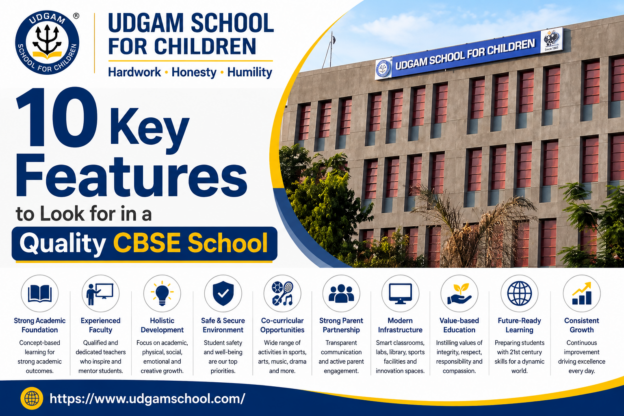
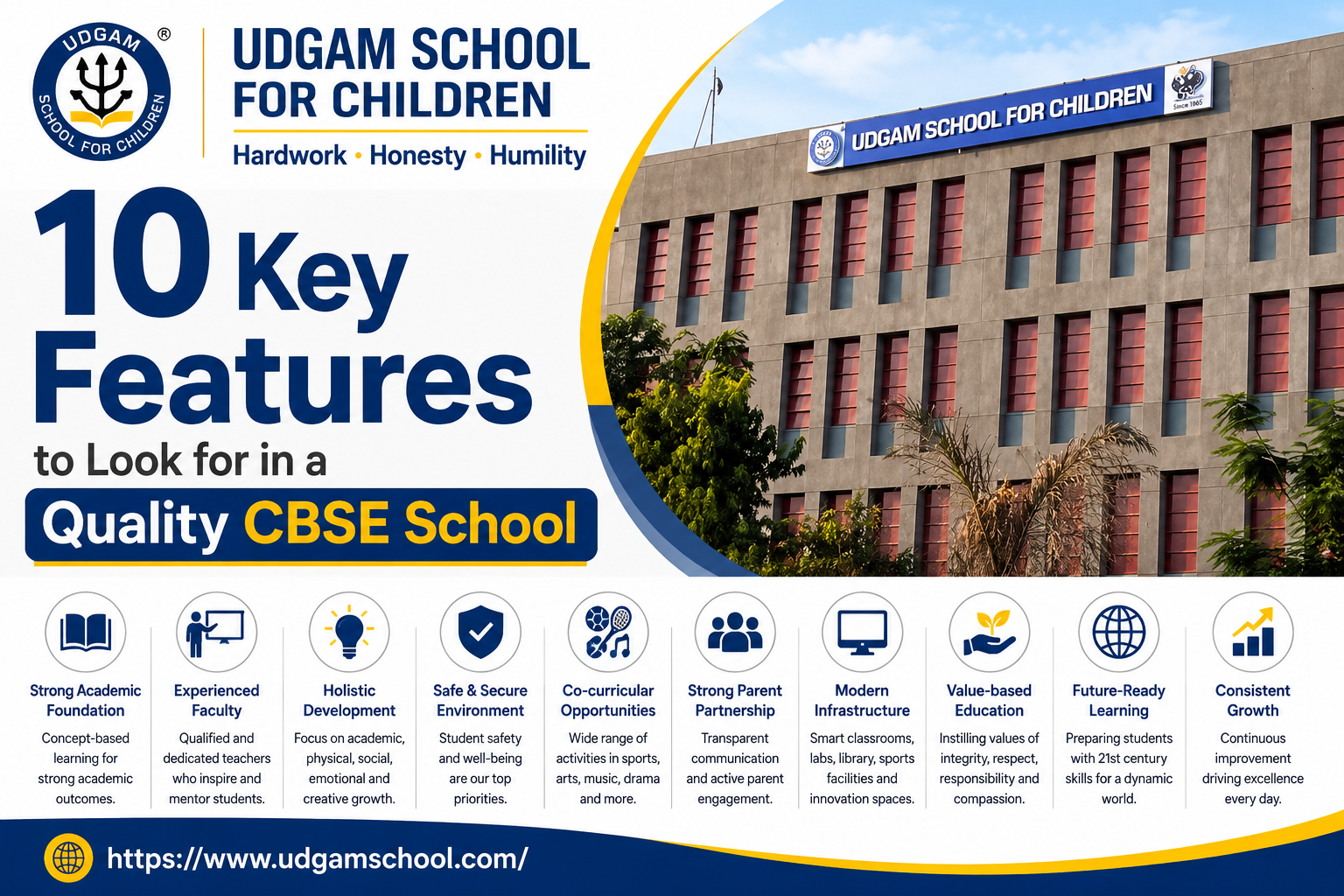
Choosing a school is one of the most important decisions a family makes because the right learning environment can influence a child’s academic confidence, social development, habits, and long-term outlook. Parents often compare curriculum, teaching quality, facilities, activities, safety, and accessibility before making a decision. However, a meaningful comparison requires more than simply looking at rankings or school names. Understanding how a school approaches learning, assessment, student wellbeing, and future readiness can help families identify the Best CBSE School In Ahmedabad for their child. This guide explains the factors parents should evaluate, questions to ask during school visits, and practical checks that can support a well-informed decision.
What Should Parents Look for in a CBSE School?
The right CBSE school should combine a strong academic foundation with experienced teachers, age-appropriate learning methods, student wellbeing, co-curricular opportunities, safe infrastructure, transparent communication, and responsible assessment practices. Parents should compare schools according to their child’s individual needs rather than relying only on reputation, advertisements, rankings, or proximity.
Why Does Choosing the Right School Matter?
School is more than a place where children complete a syllabus. It is an environment where they develop communication skills, discipline, curiosity, collaboration, problem-solving abilities, and confidence.
A suitable institution should therefore support both academic progress and personal development. Parents should consider whether the teaching approach encourages children to understand concepts rather than simply memorize information.
The CBSE curriculum is widely recognized for its structured academic framework and emphasis on competency-oriented learning.
However, the curriculum itself is only one part of the equation. How effectively teachers implement it inside classrooms can make a substantial difference to a student’s experience.
What Makes a School a Strong Choice?
Several factors can help parents distinguish between schools that appear similar on paper.
1. Teaching Quality and Classroom Practices
Teachers have a direct influence on classroom engagement. Look for educators who explain concepts clearly, encourage questions, provide constructive feedback, and adapt instruction when students have different learning needs.
During a school visit, parents can ask:
- How are students assessed throughout the academic year?
- How does the institution support children who need additional academic assistance?
- Are classroom activities designed around practical application?
- How frequently are parents informed about academic progress?
A strong teaching environment should make learning understandable, purposeful, and age appropriate.
2. Balanced Academic and Co-Curricular Development
Academic performance is important, but children also need opportunities to explore interests beyond textbooks. Sports, arts, music, technology, public speaking, clubs, projects, and community activities can help develop transferable skills.
The objective should not be to overload students with activities. Instead, the school should provide meaningful opportunities that complement classroom learning.
3. Infrastructure and Learning Resources
Infrastructure should be evaluated according to its educational usefulness rather than appearance alone.
Parents can assess classrooms, laboratories, libraries, sports areas, technology resources, sanitation facilities, transportation arrangements, and spaces for extracurricular activities.
A modern building does not automatically indicate effective education. What matters is whether facilities are maintained properly and actually support students’ learning and wellbeing.
How Can Parents Use an Ahmedabad School List Effectively?
An Ahmedabad School List can be useful as a starting point for research, but it should not be treated as a final ranking. Different families have different priorities, and a school that suits one child may not be equally suitable for another.
After creating a shortlist, compare each institution using consistent criteria. This prevents decisions from being influenced solely by reputation or promotional material.
A practical comparison should examine:
- Curriculum implementation and teaching approach
- Faculty experience and student support
- Infrastructure and safety practices
- Activities, sports, and skill development
- Communication between school and parents
- Transportation and daily convenience
- Fee structure and additional costs
What Role Does Student Wellbeing Play?
A child’s emotional and social wellbeing is closely connected with learning. A supportive environment should encourage students to ask questions, make mistakes, seek assistance, and gradually become independent learners.
Parents should understand how the school handles bullying, peer relationships, academic pressure, behavioural concerns, and student support.
Look for an environment where discipline is consistent but respectful. Children should understand expectations while also having appropriate channels to communicate their concerns.
How Important Are Curriculum and Future Readiness?
The curriculum should prepare students not only for examinations but also for changing academic and professional environments.
A future-oriented learning approach can include:
1.Conceptual understanding instead of excessive rote learning.
Research, projects, presentations, and collaborative activities.
Digital literacy and responsible technology use.
Communication, critical thinking, and problem-solving.
Opportunities to discover individual interests and strengths.
Parents should also consider how the institution supports transitions between educational stages. A good foundation during primary and secondary years can help students approach later academic choices with greater confidence.
How Should Parents Compare CBSE Schools In Gujarat?
When comparing CBSE Schools In Gujarat, parents should focus on the quality and consistency of the individual institution rather than assuming that every school delivers the curriculum in exactly the same way.
Two institutions may follow the same board framework but differ considerably in teaching methodology, campus culture, student support, activities, assessment practices, and parent communication.
The following framework can make comparisons easier:
Tble
Which Factors Should Parents Check During a School Visit?
A school visit can reveal details that websites and brochures cannot communicate effectively. Observe how students interact with teachers and whether classrooms appear orderly, engaged, and comfortable.
Parents should also ask specific questions instead of relying on general statements.
A Practical Due-Diligence Checklist
1.Verify academic information: Check the curriculum, affiliation-related information, academic structure, and assessment approach.
2.Inspect the campus: Observe classrooms, laboratories, library facilities, sanitation, activity areas, and general maintenance.
3. Understand costs: Ask for clarity about tuition, transportation, activities, uniforms, books, technology-related charges, and other applicable expenses.
4. Discuss student support: Understand how teachers identify learning difficulties and how academic or pastoral assistance is provided.
5. Review communication: Ask how parents receive updates about attendance, performance, activities, and important school matters.
What Common Mistakes Should Parents Avoid?
One common mistake is choosing primarily on the basis of reputation. A well-known institution may have strengths, but parents should still determine whether its educational approach fits their child.
Another mistake is comparing schools only through examination results. Results can provide useful context, but they do not fully describe teaching quality, student wellbeing, creativity, communication skills, or individual development.
Parents should also avoid making decisions based entirely on facilities. Technology-rich classrooms and attractive campuses are valuable only when they contribute meaningfully to learning.
Finally, families should calculate the complete cost of education rather than considering tuition alone. Transportation, activities, materials, uniforms, and other recurring expenses can affect the overall financial commitment.
How Can Families Make the Final Decision?
Once the shortlist has been reduced to two or three options, parents should evaluate each one using the same criteria.
Consider the child’s personality, learning style, interests, age, daily travel requirements, and academic needs. A younger child may benefit particularly from a nurturing environment, while older students may place greater importance on subject choices, academic guidance, and future pathways.
It is also useful to involve the child in age-appropriate discussions. Parents should make the final decision, but understanding how a child feels about the environment can provide valuable insight.
Key Takeaways
- Evaluate teaching quality, student support, infrastructure, curriculum implementation, and communication together.
- Use school lists for initial research, not as definitive rankings.
- Visit shortlisted institutions and ask specific questions about academics, safety, activities, costs, and wellbeing.
- Consider the complete educational experience rather than focusing only on marks or facilities.
- Select an environment that aligns with the child’s needs, interests, confidence, and long-term development.
Conclusion
Choosing the right school requires thoughtful comparison rather than relying on a single ranking, advertisement, or examination result. Parents should examine teaching practices, student wellbeing, infrastructure, curriculum delivery, skill development, communication, affordability, and long-term educational suitability.
A school should ultimately provide an environment where children can develop knowledge, confidence, curiosity, discipline, and practical abilities. Families researching an Ahmedabad Top CBSE School can also explore established educational institutions such as udgamschool to understand different approaches to school education and identify which environment aligns best with their child’s needs. Ultimately, the Best CBSE School In Ahmedabad is the one that offers a balanced, supportive, and academically meaningful experience suited to the individual learner.
Faqs