
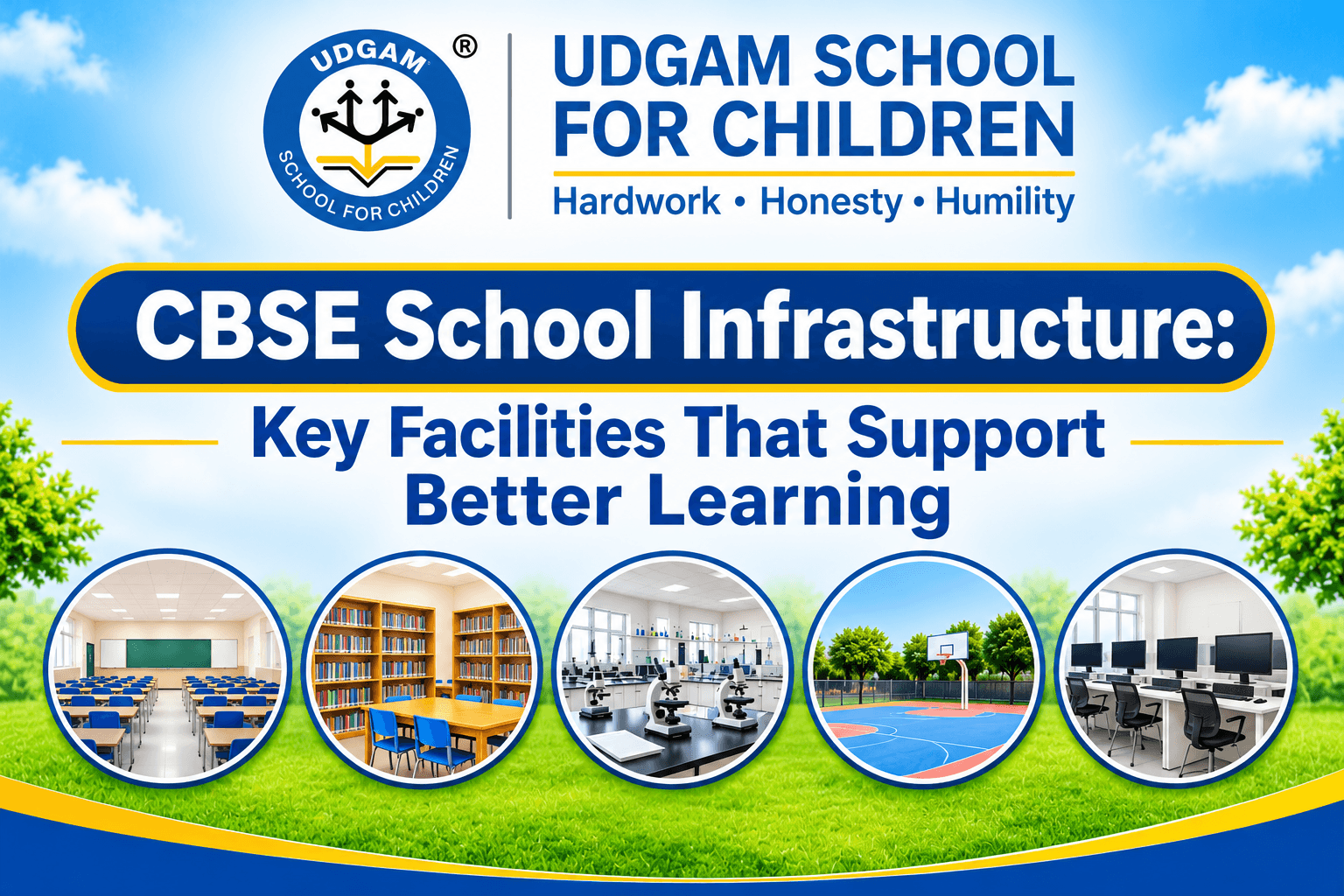
A school’s infrastructure plays an important role in shaping students’ academic performance, physical development, creativity, and overall well-being. A well-designed learning environment goes beyond attractive classrooms. It includes modern laboratories, libraries, sports facilities, technology-enabled teaching spaces, clean washrooms, safe buildings, and areas that encourage collaboration.
For parents evaluating the Ahmedabad Top Schools, understanding infrastructure is an important part of making an informed admission decision. The quality of facilities can influence how effectively students participate in classroom activities, explore practical concepts, develop physical skills, and build confidence.
CBSE schools are expected to maintain suitable infrastructure in accordance with applicable affiliation requirements and education regulations. This article explores the essential facilities that support better learning and explains what parents should consider when evaluating a school’s infrastructure.
Why Is Infrastructure Important in CBSE Schools?
CBSE school infrastructure includes classrooms, science and computer laboratories, libraries, sports facilities, sanitation systems, safety arrangements, and technology-enabled learning spaces. These facilities create an environment where students can learn through practical experiences, develop essential skills, participate in extracurricular activities, and maintain their physical and emotional well-being.
1. Well-Designed Classrooms for Effective Learning
Classrooms are the foundation of the school learning environment. Students spend a significant portion of their day in these spaces, making classroom design an important consideration.
A well-planned classroom should provide:
- Adequate natural light and ventilation.
- Comfortable desks and age-appropriate seating.
- Sufficient space for movement and group activities.
- Proper lighting and visibility of teaching boards.
- Clean surroundings and organised learning materials.
- Access to digital teaching equipment where appropriate.
Modern CBSE classrooms may also include interactive panels, projectors, and audio-visual resources. These tools help teachers explain complex topics through diagrams, presentations, educational videos, and interactive exercises.
However, technology should support teaching rather than replace meaningful teacher-student interaction.
2. Science Laboratories for Practical Education
Science laboratories help students connect theoretical concepts with practical applications. They are particularly important for developing observation, experimentation, analytical thinking, and problem-solving abilities.
CBSE schools should provide suitable laboratory facilities according to their academic levels and applicable affiliation requirements.
Essential laboratory facilities
Physics Laboratory: Supports experiments involving motion, electricity, magnetism, light, and other scientific principles.
Chemistry Laboratory: Provides appropriate equipment and arrangements for learning about chemical reactions, substances, and laboratory procedures.
Biology Laboratory: Helps students understand plant structures, human anatomy, microorganisms, and biological processes through practical activities.
A properly maintained laboratory should have suitable equipment, safe storage arrangements, appropriate ventilation, first-aid provisions, and trained supervision.
Parents should also consider whether students regularly participate in experiments instead of simply studying practical concepts from textbooks.
3. A Well-Stocked Library for Reading and Research
A school library encourages independent learning and helps students develop strong reading habits. It provides access to knowledge beyond the prescribed curriculum.
An effective library should include:
- Age-appropriate fiction and non-fiction books.
- Reference materials and encyclopedias.
- Newspapers and educational magazines.
- Subject-specific academic resources.
- Digital learning resources, where available.
- Comfortable reading spaces.
Libraries also support research assignments, vocabulary development, communication skills, and critical thinking.
For younger students, colourful picture books and storytelling resources can make reading enjoyable. Older students benefit from reference books, subject guides, biographies, and research materials.
Schools that encourage regular library periods help students develop the habit of learning independently.
4. Computer Labs and Digital Learning Facilities
Digital literacy is an important skill in modern education. Computer laboratories introduce students to technology while helping them understand its practical applications.
A well-equipped computer laboratory may include:
- Updated computers and appropriate software.
- Reliable internet connectivity.
- Projectors or interactive displays.
- Basic programming and coding resources.
- Cybersecurity and digital literacy learning materials.
- Proper seating and electrical safety arrangements.
Technology-based education can support research, presentations, creative projects, and collaborative assignments.
Schools should also teach responsible internet usage, online privacy, digital safety, and ethical technology practices.
Importantly, digital facilities should be age-appropriate and integrated into the curriculum rather than used only for occasional demonstrations.
5. Sports Facilities for Physical and Mental Development
Education should support physical fitness alongside academic achievement. Sports facilities give students opportunities to develop teamwork, discipline, leadership, coordination, and resilience.
A good school campus may offer:
- Football and cricket grounds.
- Basketball and volleyball courts.
- Indoor sports facilities.
- Badminton and table tennis areas.
- Spaces for yoga and physical education.
- Facilities for athletics and fitness activities.
Regular participation in sports helps students maintain an active lifestyle and learn how to work towards shared goals.
Parents should check whether sports facilities are regularly accessible and whether qualified physical education teachers supervise activities. A playground that students rarely use offers limited educational value.
6. Why Are Clean Washrooms and Drinking Water Facilities Essential?
Hygiene and sanitation directly affect students’ comfort, health, and ability to concentrate.
A well-maintained school should provide:
- Clean and separate washrooms for boys and girls.
- Age-appropriate toilets for younger children.
- Safe and accessible drinking water.
- Regular cleaning and sanitation schedules.
- Handwashing facilities with soap.
- Proper drainage and waste disposal arrangements.
According to CBSE infrastructure provisions, schools must provide potable drinking water and hygienic toilet facilities on each floor. The requirements also address accessibility for students with disabilities.
For parents comparing Schools In Ahmedabad, checking sanitation arrangements, water quality, and maintenance routines is just as important as examining classrooms and laboratories.
Central Board of Secondary Education+1
7. What Safety and Security Facilities Should a CBSE School Have?
A safe campus allows children to focus on learning without unnecessary risks. Safety should be integrated into the school’s infrastructure, management procedures, and daily operations.
Important safety arrangements include:
Fire safety: Appropriate fire extinguishers, emergency exits, evacuation plans, and valid fire safety certification.
Building safety: Structurally sound buildings, secure staircases, appropriate railings, and maintained electrical installations.
Campus security: Controlled entry and exit, visitor management, boundary protection, and suitable surveillance arrangements.
Medical support: First-aid facilities, emergency response procedures, and access to medical assistance.
Disaster preparedness: Regular evacuation drills and staff awareness of emergency procedures.
Parents should ask whether the school maintains valid building safety and fire safety certificates. They can also enquire about emergency contact procedures and how the school communicates with parents during unexpected situations.
CBSE’s safety provisions refer to the National Disaster Management Authority’s School Safety Policy, NCPCR guidance, and applicable building and government safety requirements.
Central Board of Secondary Education+1
8. Inclusive Infrastructure for Students with Different Needs
Every child should have an opportunity to participate in school activities. Inclusive infrastructure helps students with disabilities and different learning needs access educational facilities more comfortably.
Useful provisions include:
- Ramps at suitable entry and exit points.
- Accessible washrooms.
- Handrails and safe pathways.
- Appropriate elevator accessibility features.
- Suitable classroom seating arrangements.
- Accessible libraries and activity spaces.
The Rights of Persons with Disabilities Act, 2016 provides an important framework for accessibility and inclusion. CBSE infrastructure provisions also refer to accessibility arrangements, including ramps and facilities for wheelchair users.
Schools should consider accessibility throughout the campus rather than limiting it to the main entrance.
9. How Do Activity Rooms and Creative Spaces Improve Learning?
Academic development is only one part of a child’s education. Creative activities help students explore interests, express ideas, and develop practical skills.
Well-planned activity spaces may include:
- Art and craft rooms.
- Music and dance studios.
- Performing arts spaces.
- Robotics and innovation laboratories.
- Language and communication activity rooms.
- Spaces for group discussions and project work.
These facilities encourage students to participate in activities beyond textbooks. For example, a robotics room can introduce problem-solving and basic engineering concepts, while an art room encourages creativity and visual expression.
Schools should ensure that these facilities are supported by appropriate materials, trained instructors, and regular student participation.
10. How to Evaluate Infrastructure When Exploring Ahmedabad Top 10 Schools
Parents should look beyond attractive buildings and promotional photographs when comparing educational institutions. The quality of infrastructure depends on its condition, accessibility, maintenance, and actual use.
An Ahmedabad School List can provide a starting point for research, but parents should independently examine the facilities available at shortlisted institutions.
Consider these factors:
- Classroom conditions: Check lighting, ventilation, seating, cleanliness, and available learning resources.
- Laboratory facilities: Ask whether students receive regular practical learning opportunities.
- Library resources: Examine the variety of books and availability of reading periods.
- Sports arrangements: Find out which activities students can participate in throughout the academic year.
- Safety compliance: Verify relevant certificates and emergency procedures.
- Hygiene: Observe washroom cleanliness and drinking water arrangements.
- Accessibility: Check whether students with different physical needs can use campus facilities.
- Technology: Understand how digital resources are incorporated into teaching.
The best evaluation combines campus visits, conversations with school representatives, document verification, and an understanding of the school’s teaching approach.
11. What Are the CBSE Infrastructure Requirements Schools Should Follow?
CBSE-affiliated schools must meet the infrastructure and safety requirements prescribed under the Board’s Affiliation Bye-Laws and applicable government regulations.
Some important considerations include:
- Suitable classrooms and furniture.
- Required laboratories and learning equipment.
- Library and sports facilities.
- Adequate drinking water and sanitation.
- Fire and building safety compliance.
- Accessibility provisions.
- Facilities for physical education and recreational activities.
CBSE also notified amendments to Chapter 4 of its Affiliation Bye-Laws on 31 July 2025, including updated computer laboratory requirements. Parents can refer to the latest official documents rather than relying on older information about infrastructure standards.
Comparison: Basic vs Well-Developed School Infrastructure
| Infrastructure factor | Basic provision | Well-developed provision |
| Classrooms | Standard seating | Comfortable, technology-supported spaces |
| Laboratories | Essential equipment | Well-maintained practical learning facilities |
| Library | Limited book collection | Diverse physical and digital resources |
| Sports | Basic playground | Multiple indoor and outdoor activities |
| Technology | Computer access | Integrated digital learning |
| Safety | Basic precautions | Documented safety systems and regular drills |
| Accessibility | Limited provisions | Inclusive and accessible campus design |
Expert Insights: What Should Parents Check Before Admission?
Before selecting a school, parents should use a practical infrastructure evaluation approach.
Campus inspection checklist
- Check classroom cleanliness and ventilation.
- Visit science and computer laboratories.
- Explore the library and reading facilities.
- Inspect playgrounds and sports equipment.
- Examine washrooms and drinking water facilities.
- Ask about fire and building safety certificates.
- Check accessibility arrangements.
- Understand the school’s medical and emergency procedures.
- Ask how frequently equipment and facilities are maintained.
Common mistakes to avoid
- Selecting a school based only on its building appearance.
- Assuming expensive infrastructure guarantees better teaching.
- Ignoring hygiene and safety arrangements.
- Overlooking the actual availability of sports and activity facilities.
- Not checking whether laboratories and digital resources are regularly used.
A school with well-maintained facilities, qualified teachers, and meaningful learning opportunities can provide a more balanced educational experience.
Key Takeaways
- Quality infrastructure creates a supportive environment for academic and personal development.
- Laboratories and libraries encourage practical learning and independent research.
- Sports and creative spaces support physical fitness and confidence.
- Clean water, sanitation, and campus security are essential requirements.
- Accessible facilities promote inclusive education.
- Parents should verify safety documents and personally inspect school facilities.
- Infrastructure should complement teaching quality, curriculum, and student support.
Conclusion
School infrastructure is an essential part of quality education. From modern classrooms and practical laboratories to libraries, playgrounds, digital learning spaces, and safety arrangements, every facility contributes to students’ overall development.
Parents exploring the Ahmedabad Top Schools should evaluate more than campus appearance. They should consider infrastructure quality, maintenance, accessibility, safety compliance, teaching standards, and opportunities for extracurricular participation.
Choosing an Ahmedabad Best School involves understanding how effectively its facilities support academic achievement, creativity, confidence, and lifelong learning. A thoughtful comparison of these factors can help parents make an informed educational decision for their children.
For additional information about school infrastructure, educational planning, and academic development, parents can also explore resources from Udgam School and its educational initiatives.